 Skip to content



Luxury Floral Lehengas for Wedding Functions
Six functions in one week, and the same body has to be dressed for every single one of them. That's the real brief behind any wedding wardrobe, and it's why we sat down with Archana Shah's floral lehenga and matched each piece to the function it's actually built for, rather than just the prettiest photo in the lookbook. What follows is a function-by-function breakdown: what each lehenga is made of, why the cut works for that particular day, and where to find it.
Haldi — Light Fabrics That Move With You
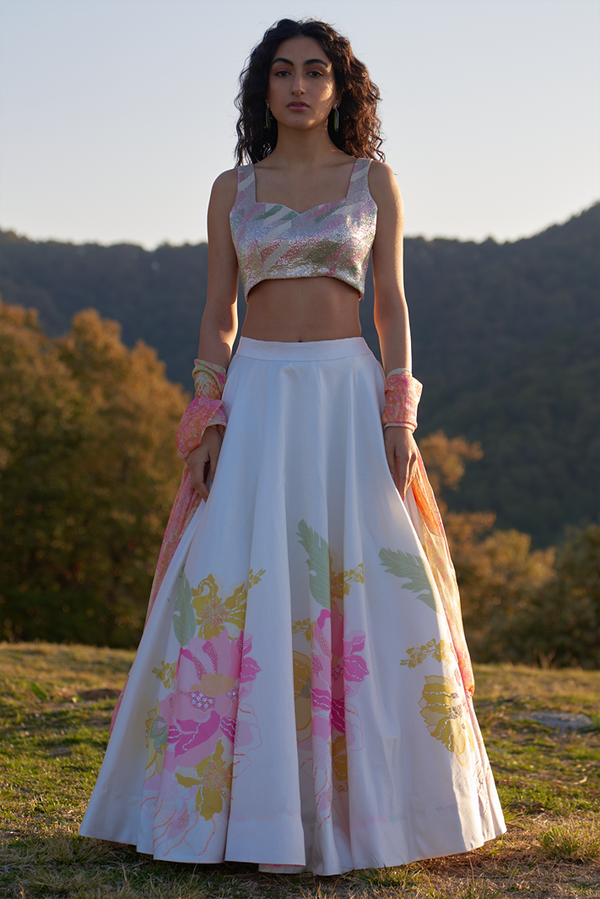
Haldi is the one ceremony where comfort matters as much as the camera does. You're seated on the floor for a good part of it, turmeric gets flicked in every direction, and a heavy lehenga starts to feel like a mistake by the second hour. The White Lily Lehenga is built for exactly this: natural Bemberg silk that's light against the skin, with digitally printed floral motifs and hand embroidery that still hold up under close-range photography.
Mehendi — Structure Up Top, Ease Below
At mehendi, most of the day happens from the waist up — you're seated with your hands out for hours while the artist works, so the bodice needs to hold its shape while the rest of the outfit stays easy to sit in. The Celadon Bloom set is structured through the top and opens into volume through the skirt, with florals scattered across a soft celadon base that reads well against the yellow-and-green decor most mehendis lean into.

MEHENDI
Sangeet — Built to Actually Dance In
Sangeet is the one function on this list where you're moving the entire night, so fit matters more here than anywhere else. The Lilac Bloom lehenga pairs a sculpted, close-fitting blouse with a fluid, expansive skirt below it — a cut that holds together mid-twirl instead of just looking good standing still. The lilac tone also happens to read well under the warmer, dimmer lighting most sangeets are shot in.

Cocktail — A Fitted Silhouette That Moves With You
Fish-cut skirts work for cocktail hour because they do two things at once: cinch at the hip for that put-together, photo-ready line, then flare enough at the hem to let you actually walk, mingle, and stand around with a drink in hand for three hours without adjusting anything. The Brown Moroccan Fish Skirt Set is cut from natural crepe silk with digitally printed florals across a pleated skirt, and the brown colourway reads more evening lounge than wedding hall — a shade that fits a cocktail crowd better than the reds and golds everyone else defaults to for Indian wedding functions.

Wedding — Romantic, Without the Weight
For the wedding itself, pink is still where most brides end up, and the Dahlia Lehenga leans into that with a paisley print that reads romantic rather than heavy-handed. The embroidered blouse and shimmering dupatta bring in the formality the day calls for, but because the print carries most of the visual weight, the outfit stays wearable through a long ceremony instead of feeling like armour by hour eight.

WEDDING
Dahlia Lehenga Set
Add a touch of romance to your wardrobe with this pink paisley lehenga, paired with a beautifully embroidered blouse. The ensemble is completed with a shimmering dupatta, creating a captivating look that is both elegant and festive. Perfect for weddings and special events, this lehenga set is a flawless blend of intricate craftsmanship and modern charm.
SHOP NOWReception — A Middle Ground in Chevron
If the Moroccan brown feels like too big a departure from tradition, the Chevron Lehenga Set is the middle ground: a Kalidar cut in natural Bemberg silk, digitally printed and then hand-finished with beads and sequins along the chevron lines. The sleeveless blouse keeps the whole look lighter, which is worth factoring in if your reception runs into a warm evening.

Building the Full Wardrobe
Six functions, six different demands on the same body, all inside one week — that's really what a wedding wardrobe has to solve for. None of these pieces were chosen for a single shared print or colour story; each one earns its place because of what that specific day actually requires, from sitting through haldi to dancing through sangeet to holding a fitted silhouette across a hundred reception photos. Start trying pieces on early. Even the best-cut lehenga needs a proper fitting window before wedding week eats your calendar.
FAQs
Q1. What lehenga should you wear for a Haldi ceremony?
A: Light, breathable fabrics in ivory or pastel florals work best for Haldi, since the ceremony involves turmeric paste and you'll be seated for long stretches. Bemberg silk with a digitally printed floral motif, like the White Lily Lehenga, holds up better under turmeric splashes than heavily embellished fabrics.
Q2. What's the ideal lehenga for Mehendi?
A: A soft-toned lehenga with a sheer, layered dupatta suits Mehendi, since you'll be sitting still for hours while the mehendi dries. The Celadon Bloom Lehenga Set's structured bodice and voluminous skirt are built for exactly that — comfortable while seated, still photograph-ready.
Q3. What should you wear for Sangeet?
A: Sangeet calls for a lehenga you can actually dance in — fitted through the bodice, fluid through the skirt, with detailing that catches the evening light. The Lilac Bloom Lehenga Set is cut for movement first, which matters more at Sangeet than at any other function.
Q4. Is a fish-cut skirt appropriate for a wedding function?
A: Yes — fish-cut or fish-tail skirts are a common choice for Reception and Cocktail because the fitted-hip, flared-hem silhouette photographs well and still allows normal movement. The Brown Moroccan Fish Skirt Set in crepe silk is one example, and works for either function depending on the colour palette of the day.
Q5. What's the difference between a Reception and Cocktail lehenga?
A: Reception looks tend to lean traditional and dramatic since they're the last major event of the wedding, while Cocktail looks favour something that moves easily through a standing, mingling crowd. The same silhouette, like a fish-cut skirt, can serve both — the styling and colourway are what shift.
Q6. What colour lehenga is best for the main wedding ceremony?
A: Pink, red, and other traditional bridal tones remain the default for the main wedding day, usually paired with heavier embroidery and a statement dupatta. The Dahlia Lehenga Set's pink-and-orange paisley print with an embroidered blouse and shimmering dupatta fits that traditional-but-current brief.
Q7. How many lehenga changes does a full Indian wedding usually need?
A: Most multi-day Indian weddings involve five to six outfit changes — Haldi, Mehendi, Sangeet, Cocktail, the wedding ceremony itself, and Reception. Each function has different practical demands (turmeric, dancing, standing, photography), which is why the fabric and silhouette should change with the occasion, not just the colour.
Q8. Is Bemberg silk good for wedding lehengas?
A: Bemberg silk is a natural, breathable fabric that drapes well and takes digital floral printing cleanly, making it a common choice for daytime functions like Haldi and Reception looks such as the Chevron Lehenga Set. It's lighter than raw silk or velvet, which matters for functions that run several hours.


