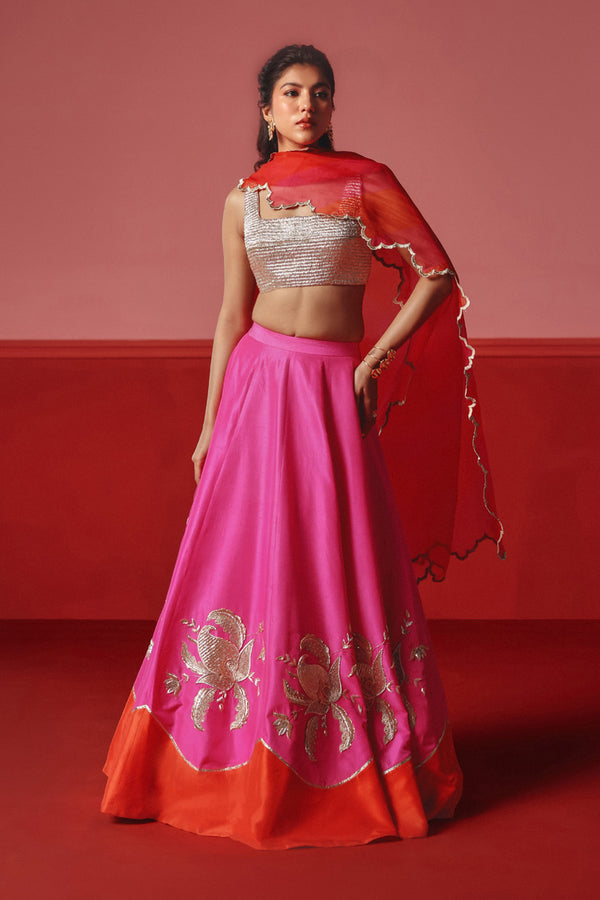
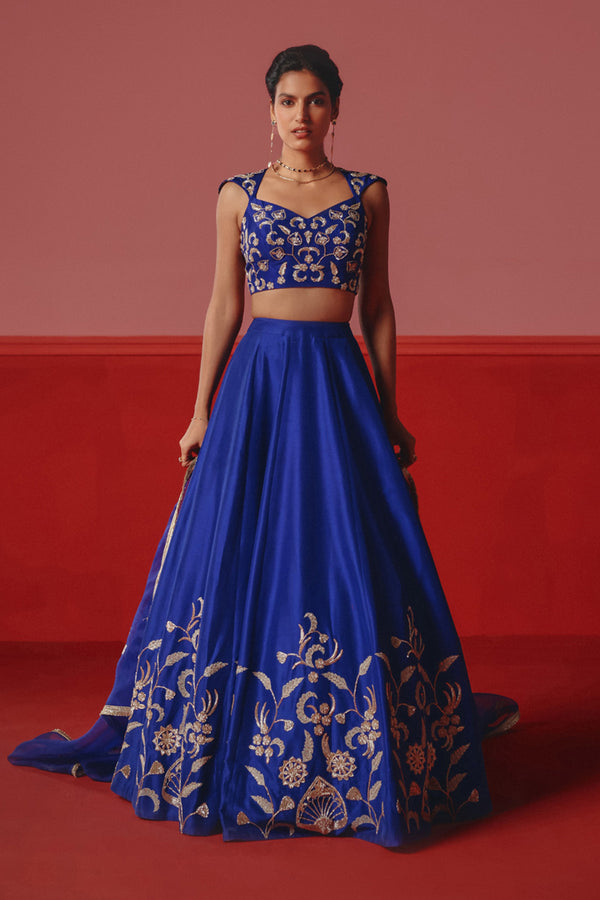
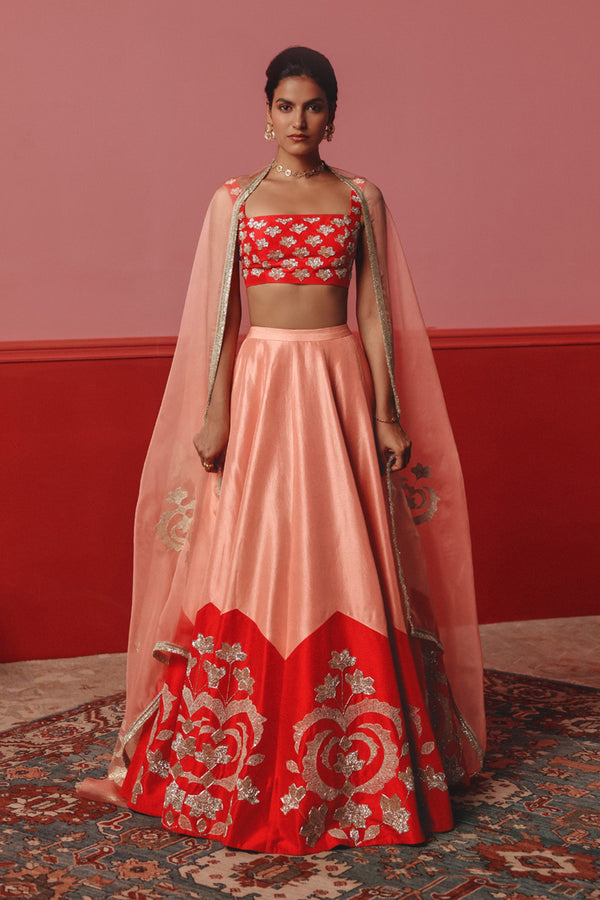
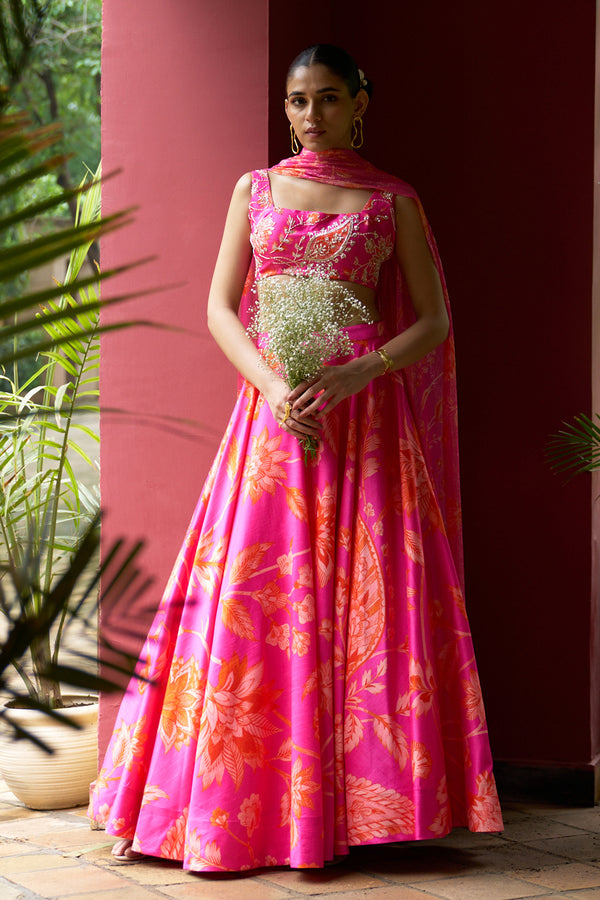
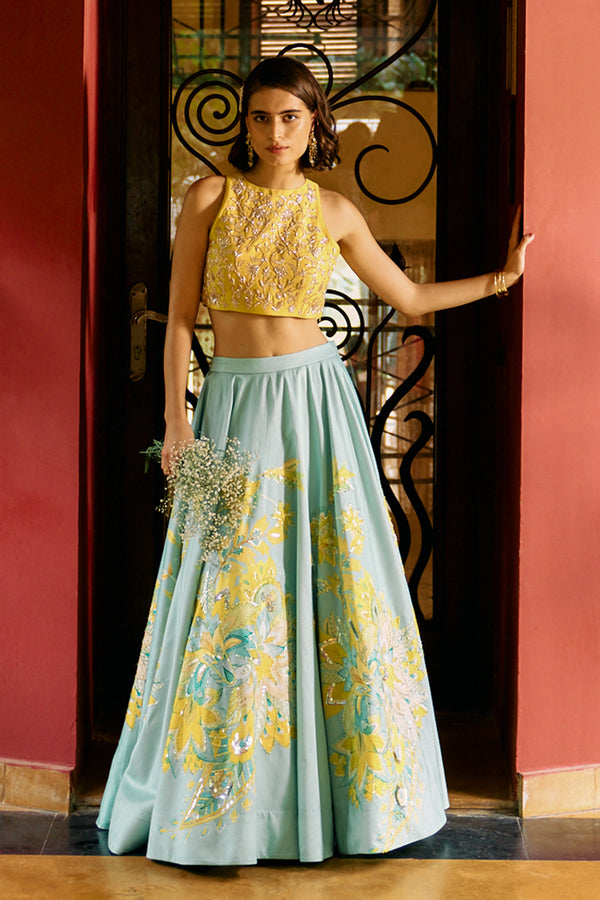
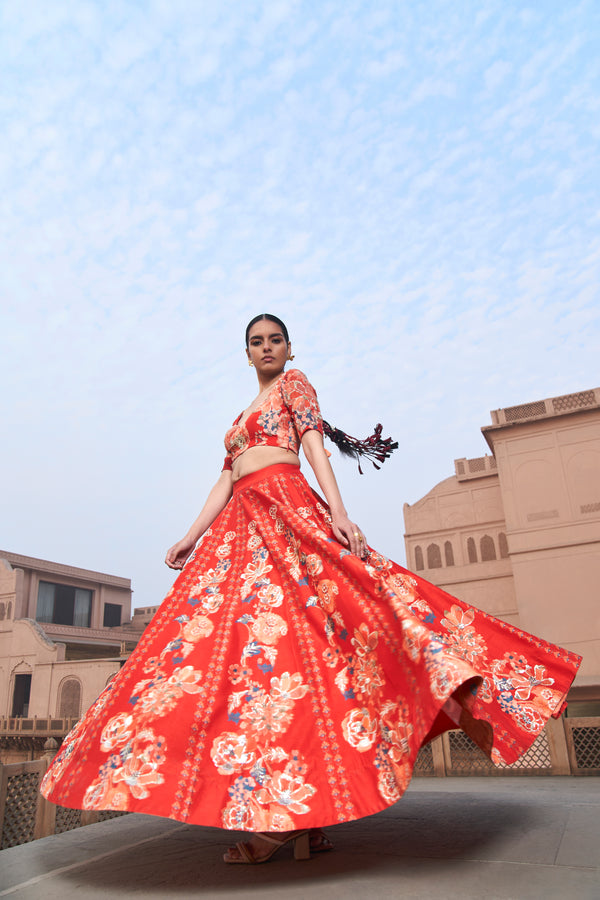
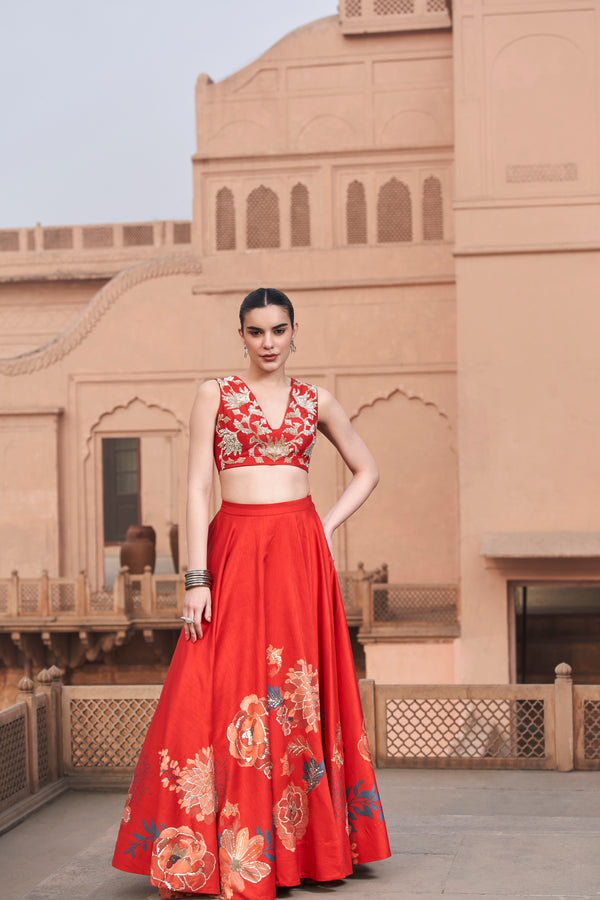
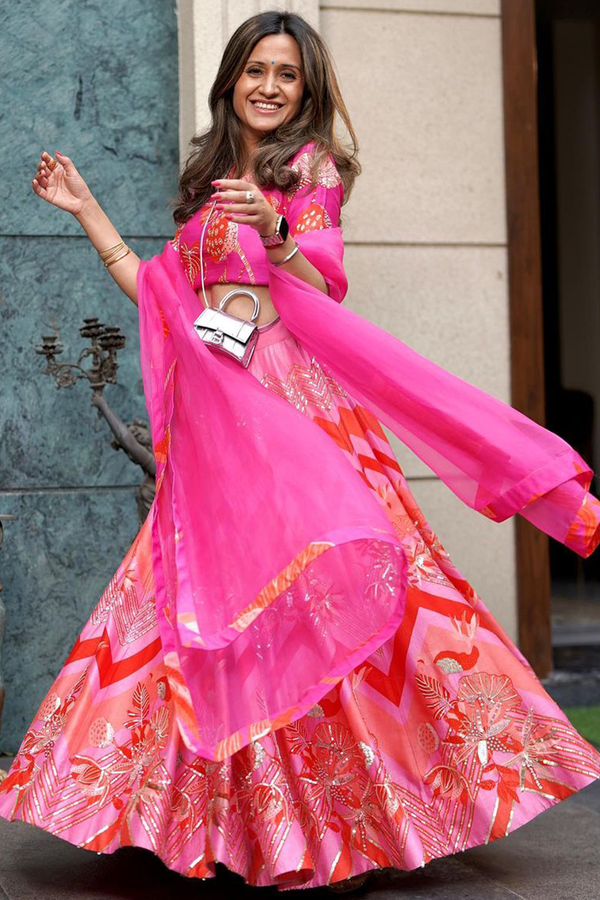
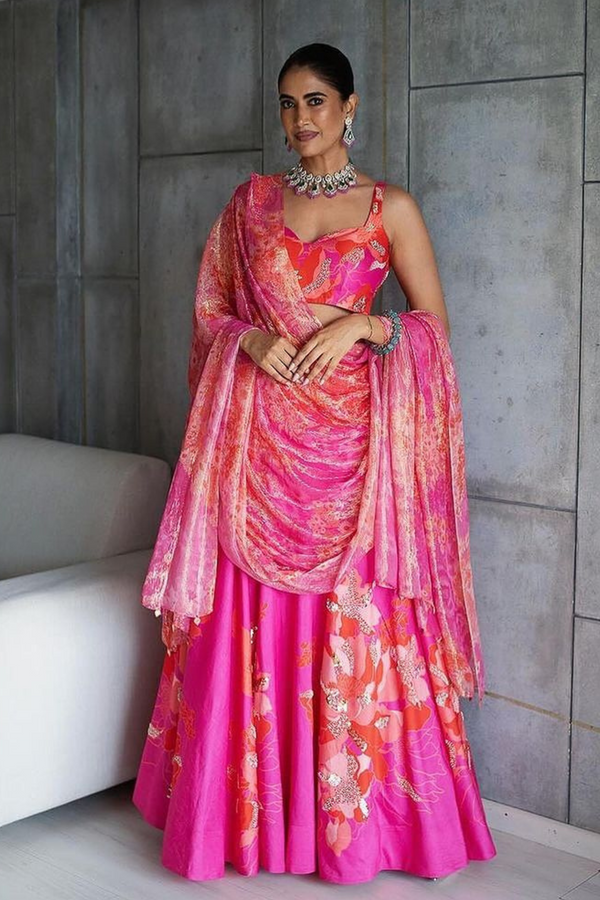
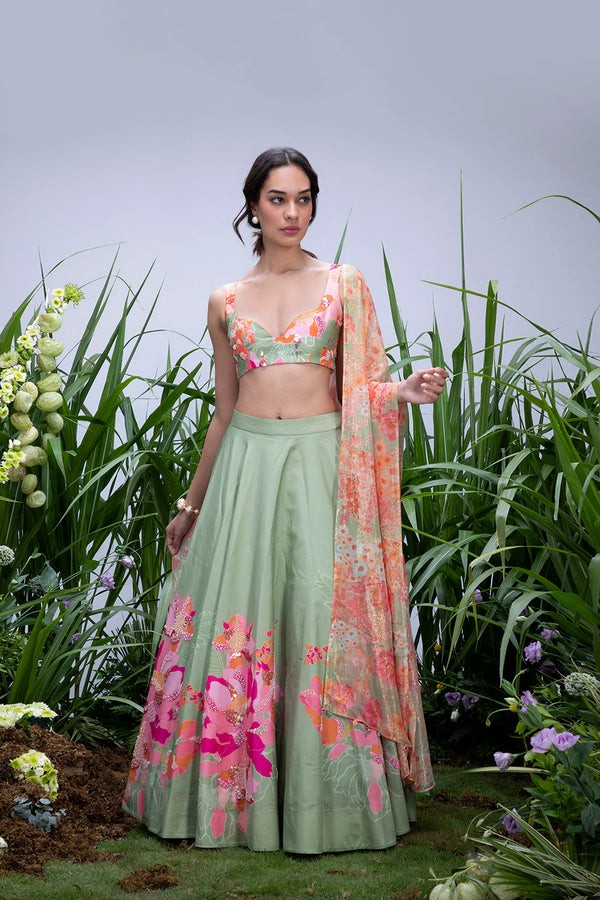
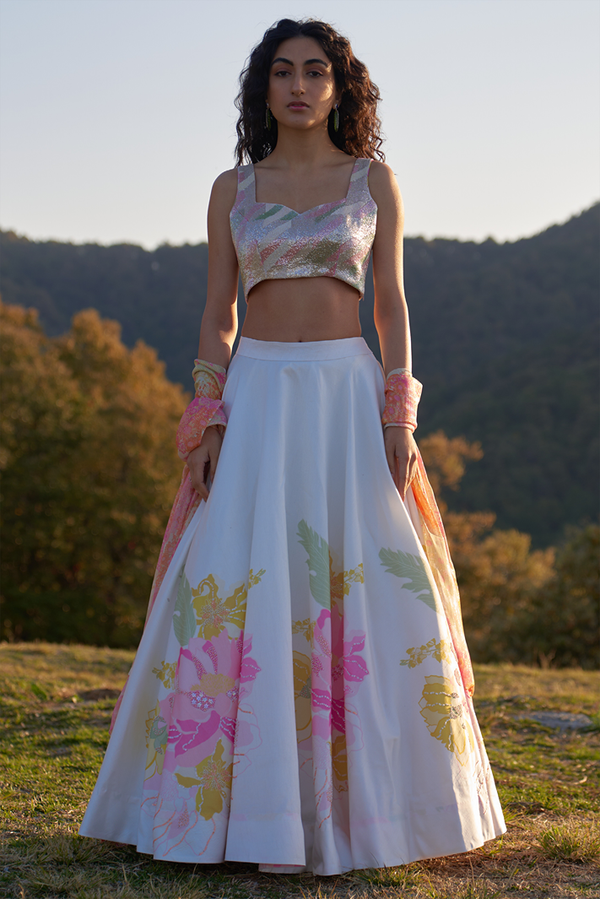
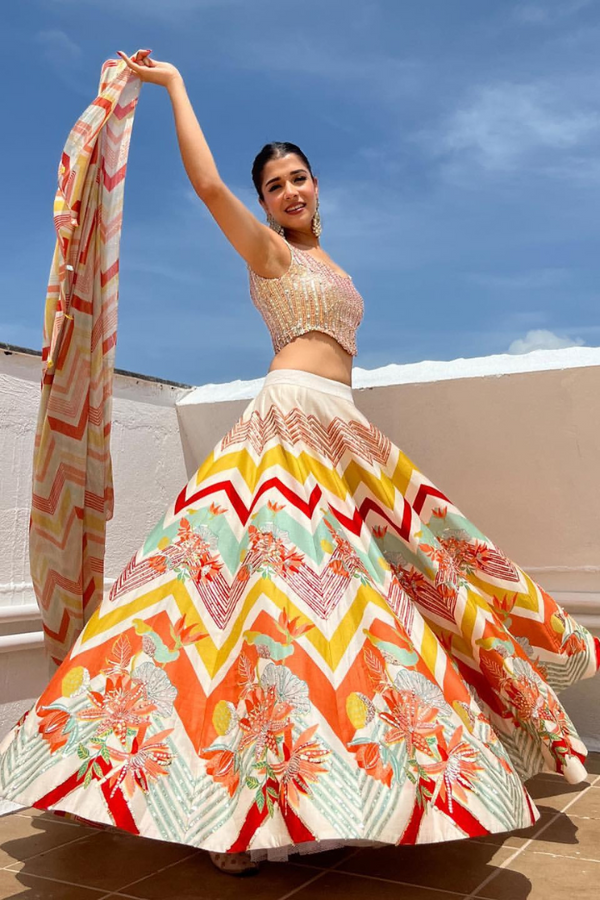
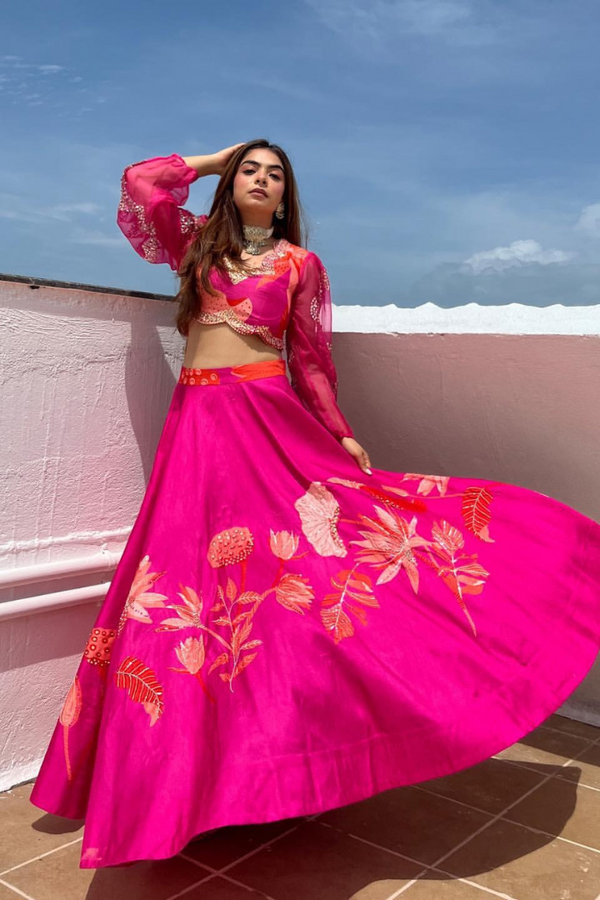
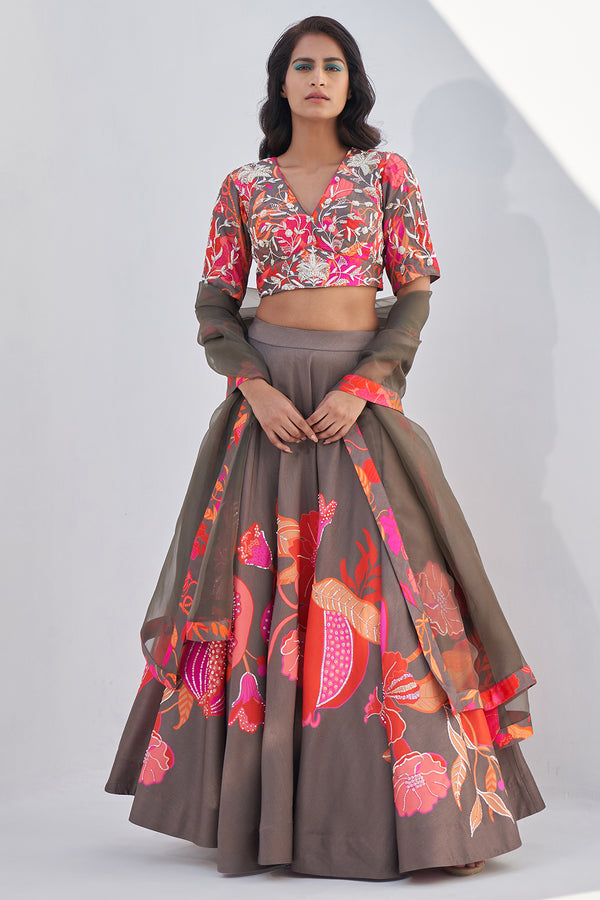
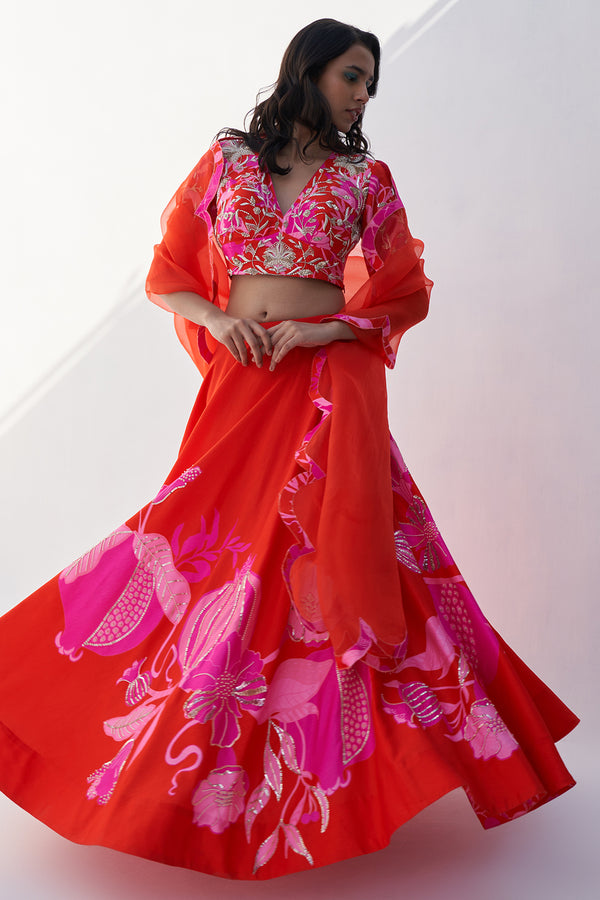
Handcrafted silk and floral lehengas for weddings, sangeet, mehendi, and festive occasions. Archana Shah's designer lehenga collection is built around clean lines and careful detailing, in fabrics that hold up through a long ceremony day. Whether you're the bride, a close family member, or a guest, there's a designer wedding lehenga here for each role — from heavily worked bridesmaid w lehenga sets to lighter festive lehengas you can wear more than once.
This isn't a collection built around one idea of what a lehenga should look like. Some designer lehengas are meant to carry the weight of the main wedding day. Others are meant to move — literally, through a sangeet performance, or through six hours of standing at a mehendi. Knowing which lehenga you need before you start browsing saves a lot of second-guessing later.
What Is a Designer Lehenga?
A lehenga is a three-piece outfit — a flared skirt, a fitted blouse (choli), and a dupatta. That part hasn't changed in decades. What makes a lehenga "designer" is a little less obvious, and it's not really about how much embroidery is on the piece.
It's about construction. How the skirt is cut so it flares correctly and doesn't sit flat when you stand still. Where the detailing is placed so it draws the eye without overwhelming the fabric underneath. Whether the fabric itself was chosen because it suits the occasion, or just because it looks good in a photo. Archana Shah's designer lehengas lean toward clean lines and restraint — detailing that's deliberate rather than piled on for effect.
The Dupatta Does More Work Than People Expect
The dupatta is the cheat code of any lehenga, honestly. It's the one piece you can genuinely restyle without touching the rest of the outfit. Pleat it over one shoulder and the lehenga reads as classic and a little formal. Belt it at the waist and the whole silhouette tightens up, more structured. Let it drape loose and unpleated, and the same designer lehenga suddenly feels relaxed enough for a daytime function.
That matters practically, too. A lot of brides and family members don't want five separate lehengas for five separate functions. Learning to re-drape one dupatta two or three different ways can genuinely stretch a single wedding lehenga across an entire wedding season.
Silk and Floral Lehengas: Two Different Approaches to the Same Wardrobe
This designer lehenga collection is really built around two fabric stories, and they're not competing with each other — they're solving different problems.
Why Silk Lehengas Still Anchor Bridesmaid Wear
Silk holds its shape. That's the whole reason silk lehengas have remained the default for Indian bridesmaid w wear for as long as they have. The fabric has enough weight and body that embroidery sits properly on it — zari work, heavy thread work, stonework, whatever the piece carries, it shows up with definition instead of collapsing into the drape.
That's why a silk lehenga tends to show up at the more formal end of a wedding calendar: the reception, cocktail parties, the wedding ceremony itself. These are evening-oriented, often indoor, and a bridesmaid with a lehenga set is expected to hold a certain presence for hours without losing shape.
Why Floral Lehengas Exist for a Different Kind of Day
Floral lehengas aren't a lighter version of a silk lehenga — they're solving for comfort first. Softer drape, lighter motifs, less structure. That makes a floral lehenga the better fit for daytime functions: mehendi, haldi, an outdoor sangeet where you're on your feet, moving, possibly dancing, and the last thing you want is a heavy lehenga skirt working against you.
There's also a visual logic to it. Daytime functions tend to happen in natural light, often outdoors, with brighter energy overall. Floral lehengas and lighter palettes read well in that setting in a way heavy silk sometimes doesn't.
Choosing a Designer Lehenga by Occasion
Every wedding season runs through a fairly predictable sequence of functions, and each one has its own unspoken dress code for what kind of lehenga fits.
Mehendi and Haldi Lehengas
These are daytime functions, usually outdoors, and usually long. Lighter lehenga fabrics and softer color palettes work best here - not because the rules say so, but because you'll be sitting for hours getting mehendi applied, or standing through a haldi ceremony that involves turmeric paste and inevitably some mess. A floral lehenga fits the energy of the day without adding unnecessary weight.
Sangeet Lehengas
Sangeet usually means dancing, sometimes a full choreographed performance. A heavily structured bridesmaid w lehenga is the wrong choice here, regardless of how good it looks standing still. What you actually want from a sangeet lehenga is a flexible silhouette and manageable weight — something you can move in without thinking about it.
Engagement and Cocktail Lehengas
These functions sit in a middle zone between festive and formal. There's more room here to choose a designer lehenga with real detailing while still keeping the whole look wearable through an evening. An engagement lehenga is less about restraint than the daytime functions, but still not full bridesmaid w weight.
Reception Lehengas
This is typically where the more structured, richly detailed silk lehenga comes back in. Receptions are formal by nature — indoor, evening, often the most photographed event after the wedding itself — and the reception lehenga is expected to match that.
Festive Lehengas
Festivals don't come with the same pressure as a wedding function, so there's more flexibility in which lehenga works. Both silk lehengas and floral lehengas suit festive occasions, and the choice usually comes down to the specific event and the time of day rather than any fixed rule.
How to Choose the Right Designer Lehenga
Start with the occasion. It's the single fastest way to narrow down which designer lehenga — fabric and silhouette both — because it rules out entire categories immediately. You're not choosing between fifty lehengas; you're choosing between the five or six that actually make sense for that day.
A bridesmaid w lehenga meant for the main wedding day is generally chosen with more structure and detailing in mind, since it needs to hold up under scrutiny and camera flashes for hours. A sangeet lehenga or mehendi lehenga benefits from the opposite instinct — lighter drape, less weight, more room to move.
For guests, the calculation is a little different. A wedding lehenga for women attending as friends or extended family can lean simpler in detailing and still feel appropriately festive. Nobody expects a guest lehenga to outshine the bride's, and overdressing for a guest slot usually reads worse than underdressing.
Fit Matters More Than Embellishment
This is the part people underestimate when choosing a designer lehenga. A well-tailored lehenga with minimal embellishment will consistently sit and photograph better than an elaborate one that doesn't fit correctly through the waist and flare. Heavy embroidery can't fix a bad fit — if anything, it draws more attention to it. Get the fit right first, then think about how much detailing your lehenga actually needs on top of that.
Styling Your Lehenga
A few practical choices shift how a lehenga wears through the day and how it comes across in photos.
Dupatta Draping
As covered earlier, this is the easiest lever to pull on any lehenga. Pleated over one shoulder for a classic look. Belted at the waist for something more structured. Draped loosely for an easier, softer effect. Same lehenga, three different outfits.
Blouse Detailing
The neckline, sleeve style, and back detailing on the lehenga's choli can shift the overall formality of an outfit even when the lehenga skirt itself doesn't change at all. A plunging back or an intricate neckline can dress up a relatively simple lehenga. A high neck and full sleeves can pull the same lehenga toward something more conservative.
Layering with Jewellery
If the lehenga is heavily worked, decide on jewellery first and build the rest of the look around it — competing with a lot of embroidery on a bridesmaid w lehenga usually means the jewellery gets lost anyway. If it's a lighter, floral lehenga, the outfit can generally take more jewellery, and it's fine to let the lehenga's detailing (or lack of it) guide how elaborate the accessories get.
Footwear and Accessories
This gets overlooked constantly, and it shouldn't. Function days that involve standing for hours in a lehenga, or dancing at a sangeet, will punish uncomfortable footwear fast, regardless of how good it looks with the outfit. Comfort matters more here than it seems like it should.
Buying a Designer Lehenga: What to Check
Before finalizing a bridesmaid w lehenga set, check sizing carefully against the brand's own size guide rather than relying on your usual off-the-rack size — fit can vary meaningfully by lehenga silhouette, and a size that works in one cut won't necessarily work in another.
If you're purchasing a wedding lehenga for a specific date, build in enough lead time for delivery and for any follow-up adjustments on fit. Wedding season timelines get tight fast, and lehenga alterations take longer than most people expect.
It also helps to think through the full lehenga outfit before committing to a final choice — blouse style, dupatta drape, and how the piece will pair with your jewellery. Deciding on the lehenga in isolation and figuring out the rest later usually means more back-and-forth than necessary.
Why Consider Archana Shah's Designer Lehengas
Every lehenga in this collection is handcrafted, not mass-produced. Clean lines, careful detailing, and fabric that survives a full wedding day — that's the consistent thread running through both the silk lehengas and floral lehengas here, rooted in Indian craft traditions but shaped for how women actually dress for weddings and festive occasions today, not how they dressed for them a generation ago. Browse the collection to find a designer wedding lehenga that fits both the occasion and your personal sense of style.
FAQs
Q1. What is the difference between a silk lehenga and a floral lehenga?
A: A silk lehenga uses silk as the base fabric, offering more structure and body — well-suited to wedding and reception functions. A floral lehenga refers to floral motifs, either embroidered or printed, and tends to feel lighter, making it a good fit for mehendi, sangeet, or daytime festive wear.
Q2. Which lehenga is best for a sangeet or mehendi function?
A: Lighter silk or floral lehengas generally work better for sangeet and mehendi, since these functions involve more movement and often stretch across several hours. Prioritise comfort and breathability over heavier embellishment.
Q3. Can I wear a silk lehenga for a reception or cocktail event?
A: Yes. Silk lehengas with refined detailing suit reception and cocktail functions well, offering a more structured, formal look compared to lighter fabrics.
Q4. How do I choose the right lehenga as a wedding guest?
A: Consider the function's time of day and formality. Daytime events suit floral or lighter lehengas, while evening functions like receptions or cocktail parties lean toward richer silk pieces. It also helps to keep embellishment levels a notch below what the bride is likely to wear.
Q5. Do designer lehengas come with a matching blouse and dupatta?
A: Most designer lehenga sets include a coordinated blouse and dupatta as part of the set, designed to complement the skirt's silhouette and embroidery. Specific inclusions are listed on each individual product page.
 Skip to content