 Skip to content



Navratri Outfit Guide: Contemporary Indian Wear Beyond Traditional Styles
Every year, somewhere around August, the same conversation starts. What are you wearing for Navratri? And every year, the answers tend to cluster in familiar territory — mirror-work chaniya cholis, red and orange dupattas, heavy embroidery on everything. Beautiful, yes. But by day three of nine nights, your feet are aching, your blouse is digging in, and you're wondering if anyone would notice if you just wore the same lehenga again.
Something has shifted in the last couple of years. Women are no longer treating Navratri as an excuse to pull out the most elaborate thing they own. They want outfits that feel festive but also feel like them — clothes they could actually dance in, that don't require a support crew to get dressed, and that might get worn again at a wedding or a dinner and not just sit in a garment bag until next October.
Contemporary Indian wear has stepped into that gap. And honestly, it's doing a better job of capturing the spirit of Navratri than you might expect.
Prints have replaced embellishment as the real statement-maker
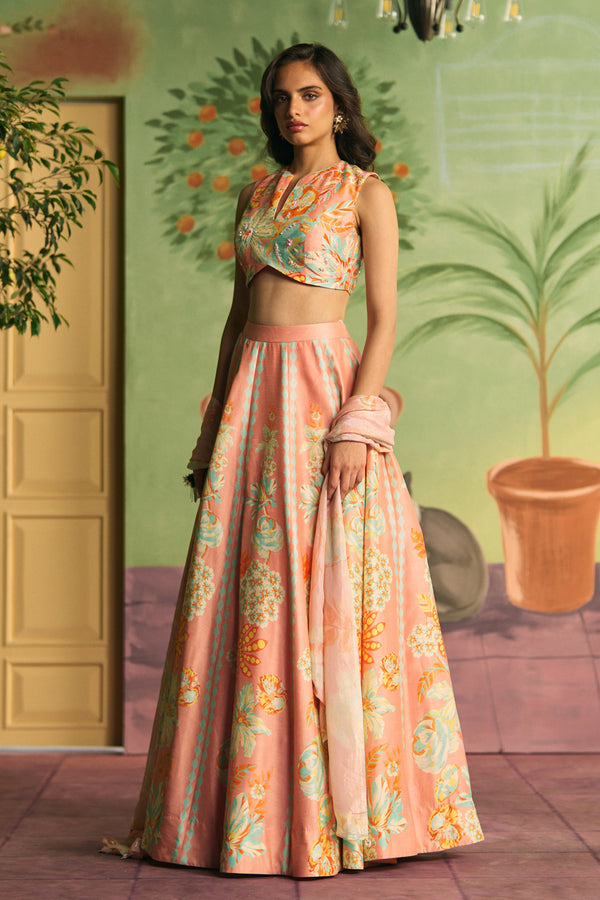
This is probably the biggest shift in festive fashion over the last few seasons. Heavy embellishment — the stonework, the heavy zari, the layered mirror work — used to be how you signalled occasion. The more embellishment, the more dressed-up you were.
That logic has started to break down. A well-designed print can carry the same visual weight as embroidery at a fraction of the actual weight you're lugging around. And when you've got four or five evenings of celebration ahead of you, that trade-off starts looking very sensible.
The Peach Bloom Lehenga is a good example. Soft florals, fluid movement — nothing about it screams "festive costume," but it reads unmistakably as occasion wear. The Lilac Bloom Lehenga does something similar in a quieter register, proving you don't always need bold colours to feel dressed for a celebration.
A well-placed floral print or a bold colour story can do the same visual work as heavy embroidery — at half the weight. When you've got nine nights ahead, that matters.
Silhouette is doing more work now
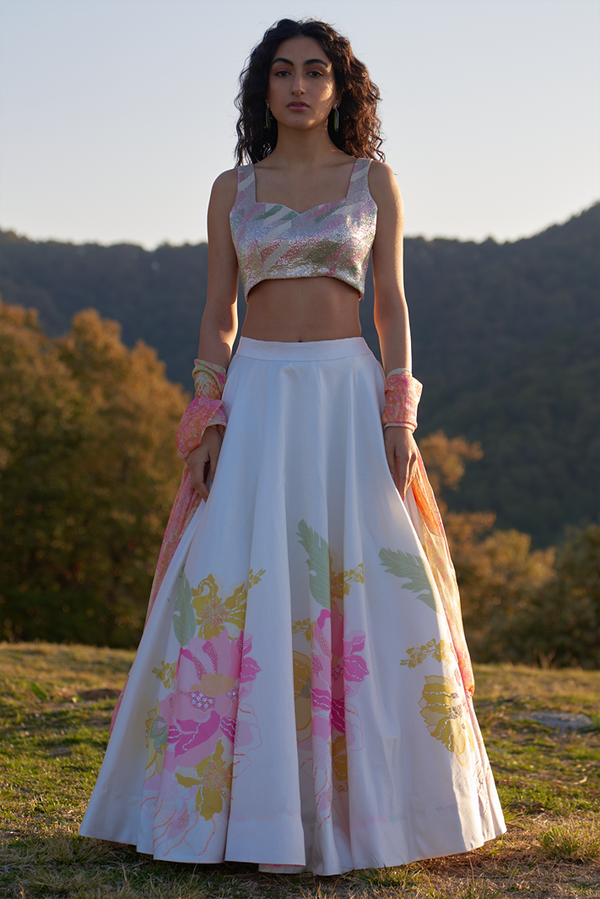
Contemporary festive dressing has become as much about cut as it is about surface decoration. The Alia Lehenga Set is a good example of this — its appeal isn't about what's been added to the fabric; it's about how the whole thing sits and moves. Balanced proportions. A structured silhouette that still feels relaxed. The kind of lehenga that looks deliberate without looking stiff.
For younger women especially, this matters. They want pieces that can travel — a lehenga that works for Navratri but doesn't feel out of place at a cousin's reception or a festive dinner. One-occasion dressing is increasingly hard to justify.
Colour is still central — just used differently
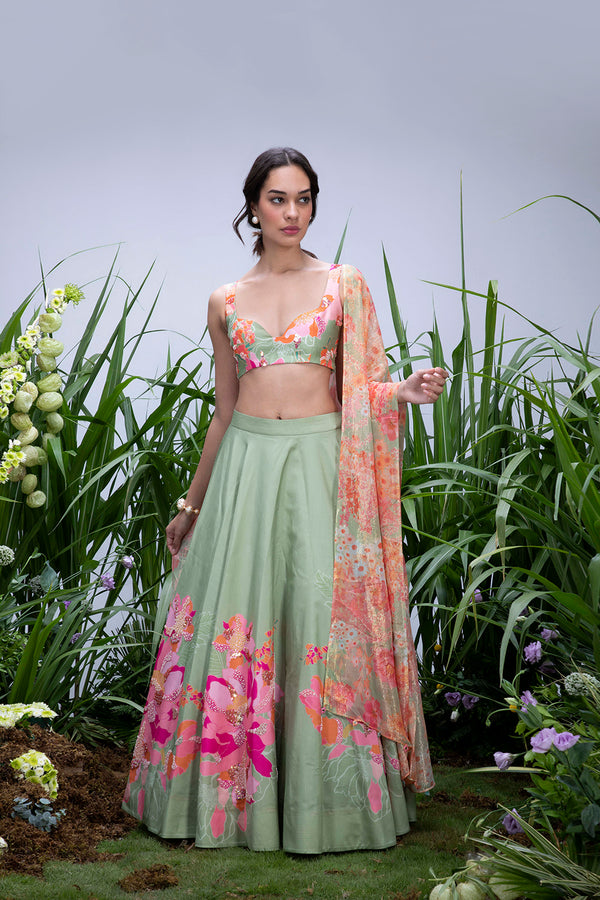
Nobody is suggesting Navratri go monochrome. Colour is still the whole point. But how it's deployed has changed.
The Pink and Orange Over Print Lehenga is genuinely loud — but the energy comes from the print's movement and the way the colours play off each other, not from embroidery or surface ornamentation. It feels celebratory in an effortless way rather than a laboured one.
On the other end of the spectrum, the Green Wildflower Centre Print Lehenga keeps things quieter — one strong placement print, a clean silhouette, no noise competing with it. Two very different approaches, both of which work for the same occasion.
Kurta sets deserve more credit than they get
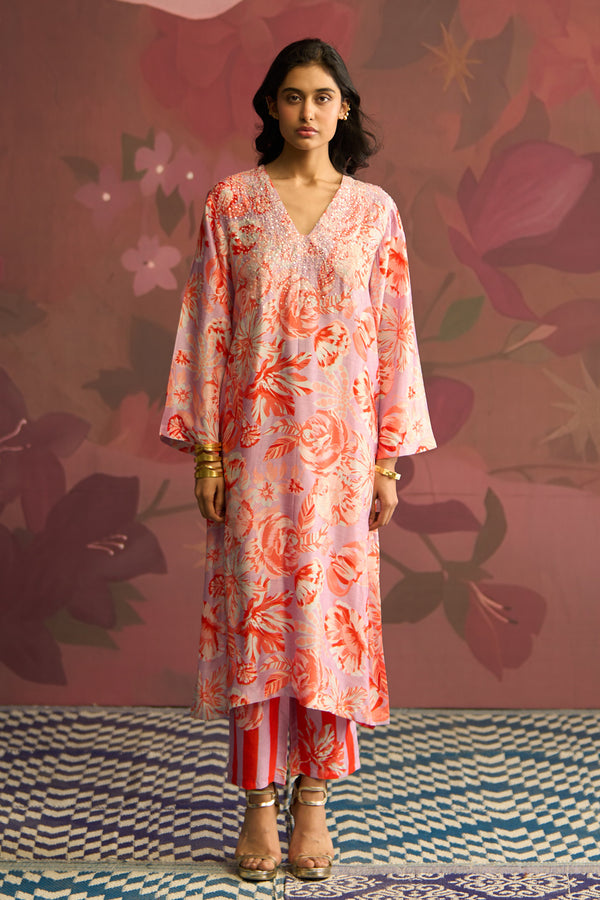
The lehenga has such strong cultural associations with Navratri that it can feel like the only option. It isn't.
For daytime events, family gatherings, or the less formal evenings of the nine nights, a well-designed kurta set is genuinely appropriate — and considerably easier to wear. The Lupine Kurta Set threads this needle well. Its print language and fluid silhouette make it feel festive without requiring the full lehenga commitment. You can wear it comfortably all afternoon, which is something most lehengas cannot claim.
When you do want a statement piece
None of this is an argument against dressing up properly. Some evenings call for it — the main garba night, a particularly significant celebration, the kind of occasion where you want to look like you made an effort.
The Gurleen Gambhir Lehenga Set is built for those moments. It's elevated enough to anchor a festive evening but retains the fluid wearability that contemporary design has made its baseline expectation. Statement and comfortable aren't mutually exclusive anymore.
How to style it without overdoing it
The rule with contemporary festive dressing is restraint everywhere except the outfit itself. Let the print or the silhouette be the thing people notice — everything else should stay quiet.
- One statement earring instead of stacked jewellery. Let the garment breathe.
- Embellished flats or juttis. You will be on your feet for hours.
- Soft glowing makeup. Heavy contouring competes with a printed outfit.
- Relaxed hair. Fluid silhouettes pair naturally with something less structured on top.
The case for contemporary Indian wear at Navratri isn't really about fashion being modern for its own sake. It's simpler than that. Nine nights is a lot of nights. You want to enjoy them, not manage them.
Lighter clothes, easier to move in, and designed to work across more than one occasion aren't a compromise on festive dressing. They might actually be an upgrade.
Whether you go for the softness of the Bloom Lehengas, the bold energy of the VV Print, or the quiet ease of the Lupine Kurta Set — the point is to feel like yourself while celebrating. That tends to look better than anything else anyway.
FAQs
Q1. Do contemporary lehengas still feel appropriate for Navratri, or do they look too casual?
Yes-and this is the question most people are really asking when they look at print-led or lighter festive wear. The short answer is that occasion-appropriateness in Indian dressing has always been about how something is put together, not how much embroidery is on it. A fluid lehenga in a strong floral print, styled with the right jewellery and footwear, reads festive immediately. What makes something feel too casual is usually under-styling, not the garment itself.
Q2. Can I wear a kurta set to garba, or is a lehenga really necessary?
A: It depends on the event. For a large, formal garba night - the kind with a stage and a DJ- a lehenga tends to fit the energy better. But for family gatherings, daytime pujas, or smaller community celebrations, a well-chosen kurta set is perfectly at home. The key is fabric and print; something like the Lupine Kurta Set in a festive colour or print signals that you dressed intentionally, which is really all that matters.
Q3. How do I make a printed lehenga look more elevated and less everyday?
A: Three things make the biggest difference: jewellery, footwear, and how the dupatta is worn. A single statement earring - something with some weight to it - immediately shifts the register. Embellished juttis or block-heeled sandals do more for a printed lehenga than any amount of extra accessories. And if the dupatta is draped properly rather than just thrown on, the whole outfit looks considered. The print is doing visual work - your job is to frame it, not compete with it.


