 Skip to content



Why Floral Prints Never Go Out of Style in Indian Ethnic Fashion
Some prints belong to a season. Florals don't - every generation seems to circle back to them. Delicate botanical motifs one year, oversized painterly blooms the next; they bend to whatever colour, craft, or silhouette gets thrown at them, which is probably why they never really left.
They've also outgrown the "feminine print" box. Fluid kaftans, statement shararas, co-ords, kurta sets - florals show up everywhere now, from a small dinner to a full wedding.
They keep changing shape
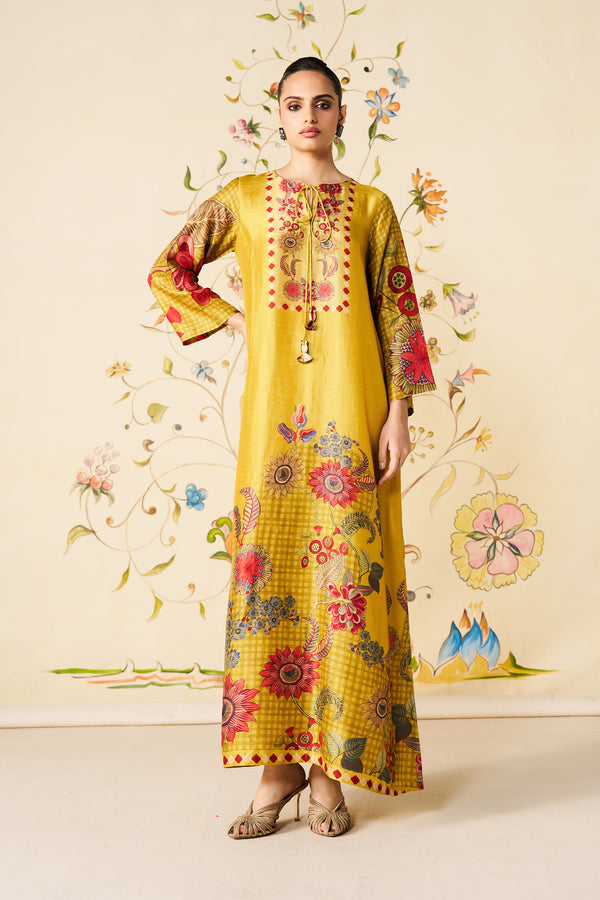
Tiny delicate motifs one season, oversized abstract blooms the next. The Goldcrest Kaftan leans into that - a fluid cut that lets the print carry the whole look. Kaftans in general are an easy way into florals: festive lunches, small gatherings, nothing that needs the formality of a full occasion outfit.
Old silhouettes, new prints
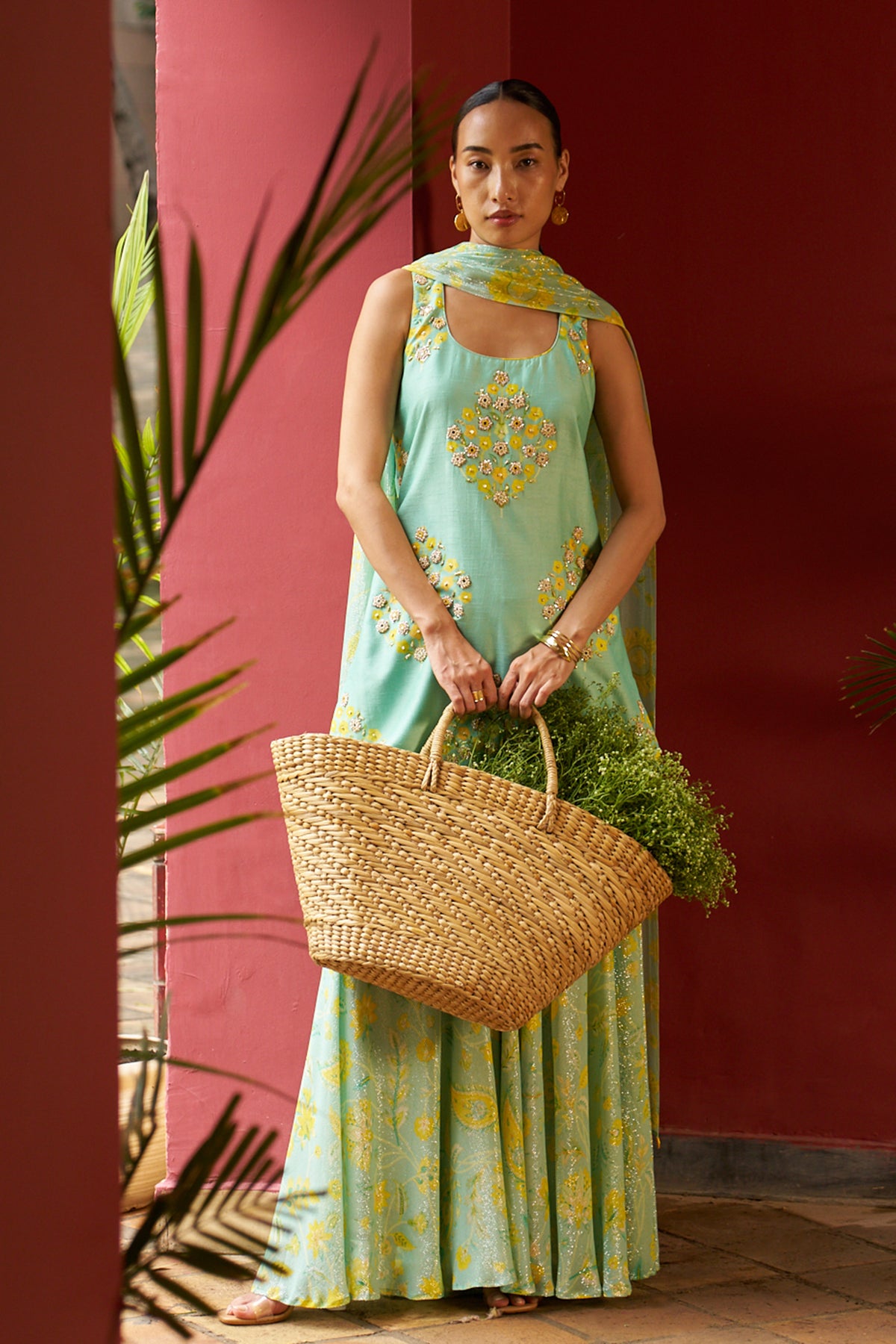
Florals and Indian occasion wear go way back, but a fresh print treatment can make an old shape feel new. The Azure Highlight Sharara throws bright colour into the classic sharara — works for mehendis, daytime weddings, most festive days really. The Azalea Sleeveless Sharara does something similar with a cleaner sleeveless cut.
A printed sharara still gives you that traditional movement and volume, just without the heavy embellishment.
When a print looks like a painting
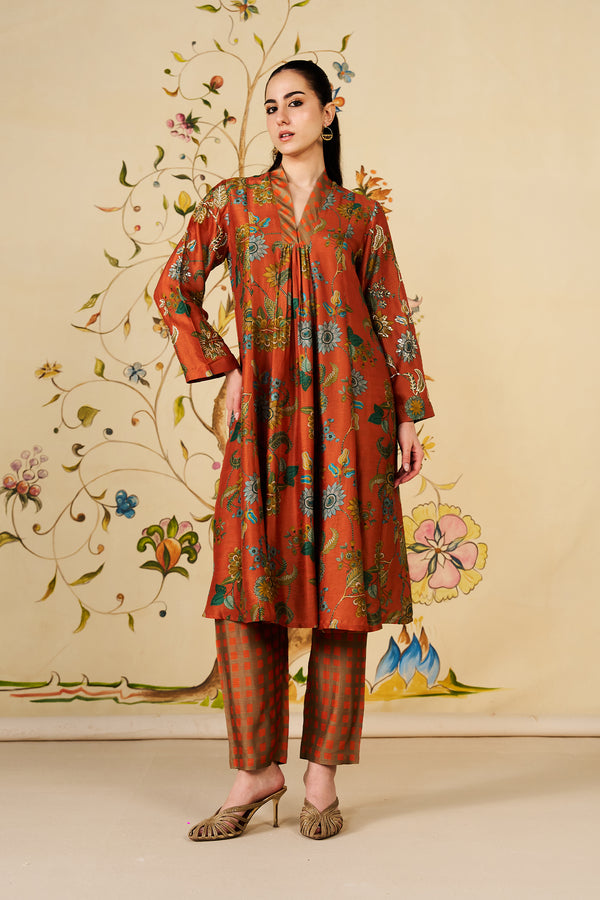
The more interesting shift lately is florals that read like illustrations rather than repeated motifs. The Rosalie Kurta Set is a good example of this - expressive botanical artwork, contrasting patterns, a kurta set that ends up looking more like art than print. It carries a look through colour and composition alone, which means less ornamentation but still enough presence for a celebration.
Co-ords make florals feel different
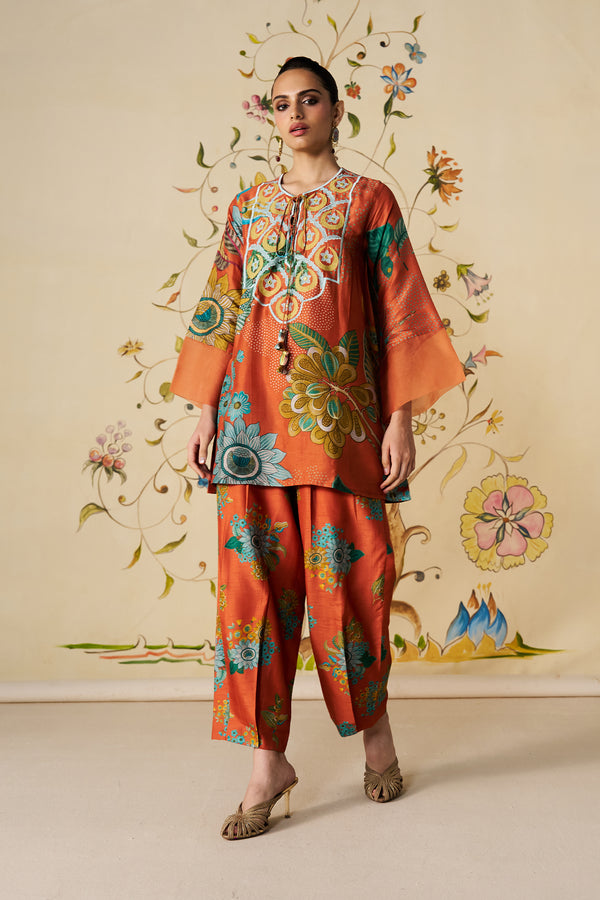
Co-ord sets put florals in a completely different context: relaxed shirts and tunics with contemporary trousers, still holding onto the craftsmanship you'd expect from occasion wear. The Aurelia, Acorn, and Amber co-ord sets all come from the same floral language but look nothing alike once silhouette and colour change.
For a brunch or a smaller wedding function, a floral co-ord is a decent alternative to the usual ensemble. Sculptural earrings, metallic footwear, a statement clutch - skip the traditional jewellery here.
Almost any palette works
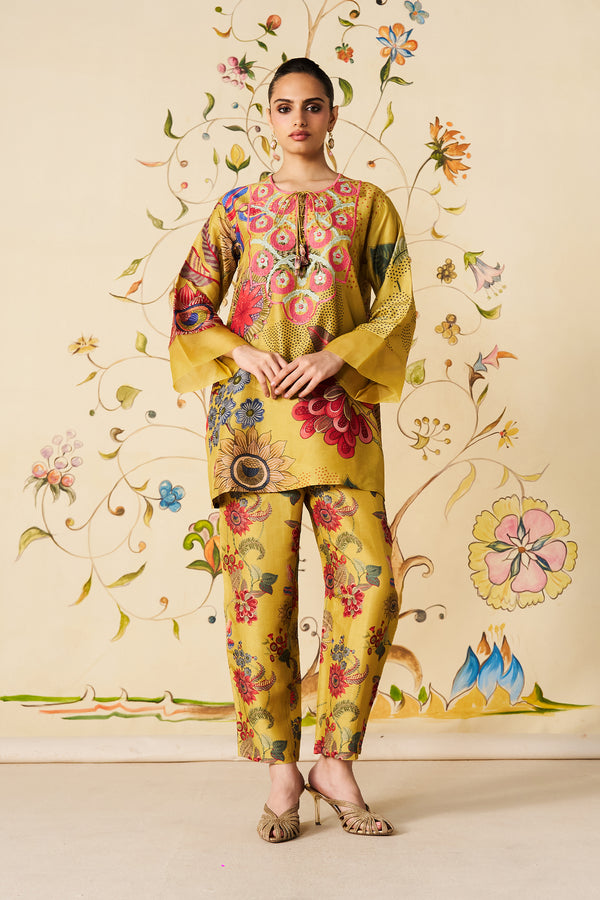
Florals don't lock you into one colour story. Pastels read romantic, brighter shades feel celebratory, deeper tones lean more formal — which is also why the same floral piece can get worn more than once. Bright florals for a mehendi, darker botanical prints for something later in the evening.
Shararas suit florals particularly well
There's something about the volume in sharara trousers that gives a print room to actually move. The Mirage Meadow Sharara Set leans on this — the print does the work instead of heavy embellishment. For a wedding guest, that's a useful trade-off: festive enough for the day, comfortable enough to survive several hours of it.
Why florals aren't going anywhere
Trends shift. Flowers stay flowers - delicate or dramatic, traditional or abstract, loud or quiet, depending on who's designing them. That range is basically why they never date.
For the person actually wearing them, that means a well-made floral kurta, kaftan, co-ord, or sharara doesn't have to belong to one moment. It can just get worn again.
Archana Shah's floral print ethnic wear runs through painterly botanicals and festive motifs, in silhouettes and colours meant to outlast a single season.
FAQs
Q1. Do floral prints work for weddings, or are they too casual?
A: Depends on the print, honestly. A big painterly botanical on a sharara or kurta set can hold its own at a wedding - it's doing the job embellishment usually does, just through print instead of embroidery. Works especially well for daytime weddings and mehendis.
Q2. Kaftan vs. kurta set - what's actually different?
A: A kaftan is loose, with no fitted waist, so the print spreads across the fabric uninterrupted. A kurta set is more structured and usually shows off contrast patterns or paneling better, since there's an actual shape to work with.
Q3. Can I get away with a floral co-ord at a wedding function?
A: For something smaller - brunch, mehendi, a close friend's wedding- sure. For the main ceremony, it can read a bit too relaxed unless the fabric itself is clearly elevated. Co-ords are best when the vibe you want is festive but not fussy.
Q4. How do I keep a floral sharara from looking too busy?
A: Simplify the top. If the sharara print is loud, a plain top balances it out. And go easy on jewellery - one statement piece is enough when the outfit's already doing a lot of visual work.
Q5. Does floral suit every body type and skin tone?
A: Mostly, yes. Pastels lean soft and work well on lighter looks; richer, deeper florals tend to suit more skin tones. Placement actually matters more than the print; an oversized bloom near the waist can shape the silhouette. In contrast, an all-over print is more forgiving if you don't want the focus on any specific area.
Q6. Is floral a summer-only print?
A: No real reason it should be. Deeper florals, maroon, emerald, navy backgrounds work fine for winter weddings and evening functions. Lighter pastels suit daytime and warmer months better. It's the colour and fabric weight doing the seasonal work, not the flowers themselves.
Q7. Will a floral print look dated in a couple of years?
A: Painterly, artistic florals tend to hold up better than tight repeated geometric ones, which feel more tied to a specific moment. If it looks like it could've been painted rather than printed off a machine, it'll probably age fine.


